


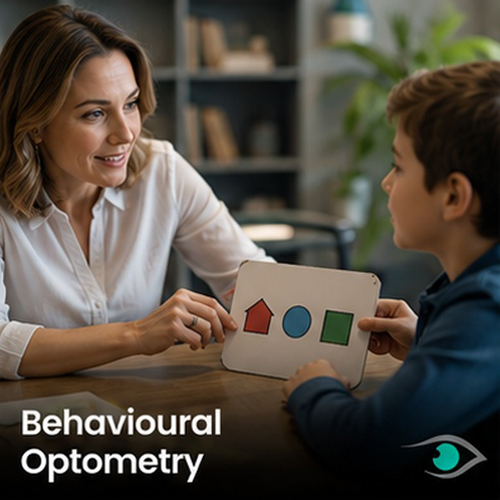
Behavioural optometry looks at how vision is used during everyday activities such as reading, learning, sport, work and play.
It considers more than whether each eye can see clearly. It may also assess how the eyes focus, move, track and work together, as well as how comfortably a person manages visually demanding tasks.
Some people experience headaches, tired eyes, difficulty concentrating, losing their place while reading or discomfort during close work even when standard eyesight appears normal.
Behavioural optometry aims to identify whether visual skills may be contributing to these difficulties and whether practical support could make everyday tasks feel more comfortable.