

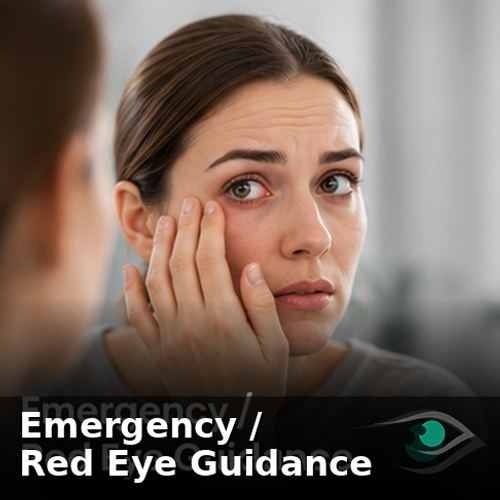
Contact us as soon as possible to book an appointment and explain your symptoms clearly, particularly if you have pain, light sensitivity, reduced vision, an injury or contact lens-related redness.
Bring your current glasses, contact lenses, lens solutions, medication list and any eye drops you have already used. Remove contact lenses if they are causing pain or significant irritation, and do not wear them again until you have received professional advice.
For chemical exposure, immediately rinse the eye continuously with clean running water or saline for at least 15 minutes and seek urgent medical advice.
For sudden severe eye pain or vision loss, call Triple Zero (000) or attend the Royal Perth Hospital or Sir Charles Gairdner Hospital emergency departments.
How we can help
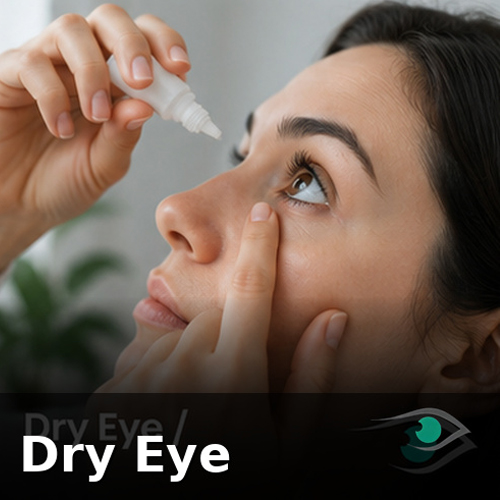
Our optometrists can assess your tear film, eyelids, eye surface and symptoms to help identify the type and likely causes of your dry eye.
The optometrist can recommend a treatment plan suited to your eyes. Depending on the findings, this may include suitable lubricating drops or gels, eyelid care, warm compresses, changes to contact lens wear or practical adjustments to your daily environment and screen habits, long term treatments for the underlying causes of dry eye.
Dry eye is often an ongoing condition, so follow-up care may be recommended to monitor progress and refine your treatment. Our goal is to help your eyes feel calmer and more comfortable, while giving you a manageable routine that fits into real life.
Tips for your visit
Bring any eye drops, contact lenses, lens solutions and medications you currently use. This helps us see what you have already tried and whether those products are suitable for your symptoms.
Make a note of when your eyes feel worst. Symptoms may change during screen use, driving, contact lens wear, windy weather or time spent in air-conditioned rooms.
Seek prompt professional advice if you develop significant eye pain, strong light sensitivity, sudden changes in vision or severe redness, as these symptoms may indicate something more urgent than ordinary dry eye.